

road safety pshe hero

Road safety PSHE audit for curriculum leaders

Authored by the Muse Wellbeing Team

First Published on the 1st of August, 2026.

Lead Writer

David is a qualified British teacher and the Muse Wellbeing director and lead curriculum developer. His main passions include education, surfing (badly) and travel.

Editorial Review

With over 15 years of experience teaching in primary schools in northern England, Charlotte has played a key role in shaping many lessons across the Muse Wellbeing curriculum.
Road safety PSHE helps pupils recognise risk, make safer choices and prepare for increasing independence. Learning should move from adult-supported routines in KS1 to comparing routes and managing distraction or peer influence in upper KS2.

From 1 September 2026, road safety becomes an explicit primary Health Education requirement for state-funded schools in England. Until then, it may be taught through wider PSHE rather than as a separately named outcome.

This guide supports PSHE leads to plan age-appropriate knowledge, progression, teaching and assessment. Statutory references apply to England.

Contents

Empty space, drag to resize

Road safety within the primary PSHE curriculum

Road safety supports pupils to recognise hazards, make safer decisions, manage distraction and seek help. In upper primary, it can also address route choice, peer influence and greater independence where appropriate.

Until 31 August 2026, road safety may be taught through wider PSHE. From 1 September 2026, revised guidance requires state-funded primary schools to teach pupils how to recognise risk and keep safe around roads, railways, including level crossings, and water.

PSHE leads should map progression from adult-supported routines in KS1 to more complex judgement in upper KS2, using local examples without assuming every pupil travels independently.

As with any PSHE lesson, discussion may prompt a safeguarding concern. Staff should listen, avoid investigating and follow the school’s reporting procedures.
Empty space, drag to resize

Planning clear road safety PSHE outcomes

Set one assessable road safety outcome

Replace broad aims such as “learn about road safety” with an outcome pupils can demonstrate, for example choosing a clearer crossing point or explaining how visibility affects risk.

This keeps teaching and assessment focused.

Identify the main learning purpose

Decide whether the main purpose is to build knowledge, develop judgement or rehearse useful language and routines. Activities should contribute directly to that outcome.

The elements may overlap, but avoid a sequence of disconnected tasks.

Plan safeguarding and inclusion

Use fictional names and routes rather than asking pupils to describe their exact journeys. This protects privacy and keeps discussion focused on learning.

Agree or revisit suitablePSHE ground rules before discussion. Pupils should know that they can pass on a question, that examples should remain general and that adults may need to act if something suggests a child is unsafe.
Empty space, drag to resize

Road safety PSHE knowledge for KS1 and KS2
road safety pshe rules
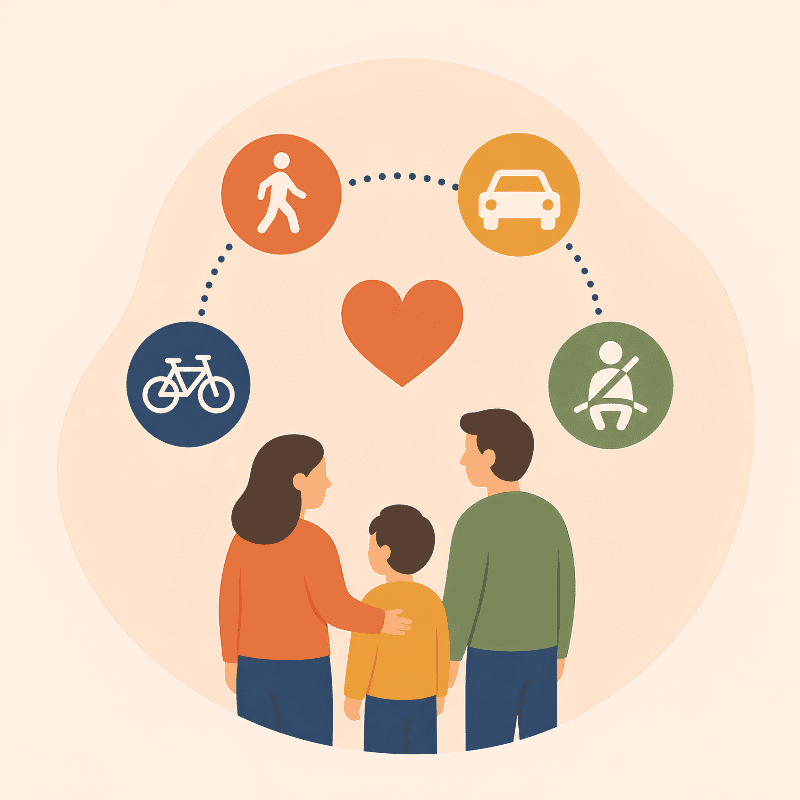
Road safety teaching should move beyond slogan recall. Pupils need clear messages and opportunities to apply them to realistic choices.

The Highway Code’s Green Cross Code provides a useful foundation. It advises pedestrians to find a place where they can see clearly, use a crossing where one is available, stop before the kerb, look and listen in all directions, wait for a safe gap and continue looking while crossing.

Core road safety messages for KS1

For KS1, use short, consistent language across lessons, trips and everyday reminders.

  • Use the pavement where one is provided and stay close to the adult you are travelling with.
  • Stop just before the kerb. Do not step into the road while checking for traffic.
  • Look all around and listen carefully. Traffic can come from more than one direction.
  • Use a crossing where there is one nearby. Otherwise, choose a place where you can see clearly in all directions and drivers and riders can see you.
  • Wait with the adult until it is safe to cross. Walk straight across without running and continue looking and listening.
  • Use the correct child car seat or seat belt for your age and size and keep it fastened throughout the journey.

The Department for Transport’s THINK! KS1 resources use the Stop, Look, Listen and Think sequence and include practical lesson materials for young pupils. They can complement a school’s PSHE planning and local examples.

Core road safety messages for KS2 

KS2 teaching should retain the core crossing routine while increasing the emphasis on changing conditions, reasons and judgement.

  • Choose a safer place to cross where you can see clearly, even when it is not the shortest route.
  • Avoid crossing between parked vehicles, near a blind bend or where a large vehicle blocks your view.
  • Put phones away and give the road your full attention when approaching or using a crossing.
  • Take extra care at junctions, entrances, car parks and places where vehicles may turn or reverse.
  • Do not cross directly in front of or behind a large vehicle, particularly when its engine is running. Never assume that the driver has seen you.
  • Do not allow rushing, embarrassment or pressure from friends to determine when or where you cross.

THINK! provides KS2 road safety lesson plans that explore safer routes, independent travel, different road users and pupil-led campaigns. Bikeability can then provide practical cycle training. Classroom PSHE supports decision-making, but it should not be presented as a substitute for supervised practical training.
Empty space, drag to resize

Road safety PSHE progression from Reception to Year 6
road safety pshe lesson
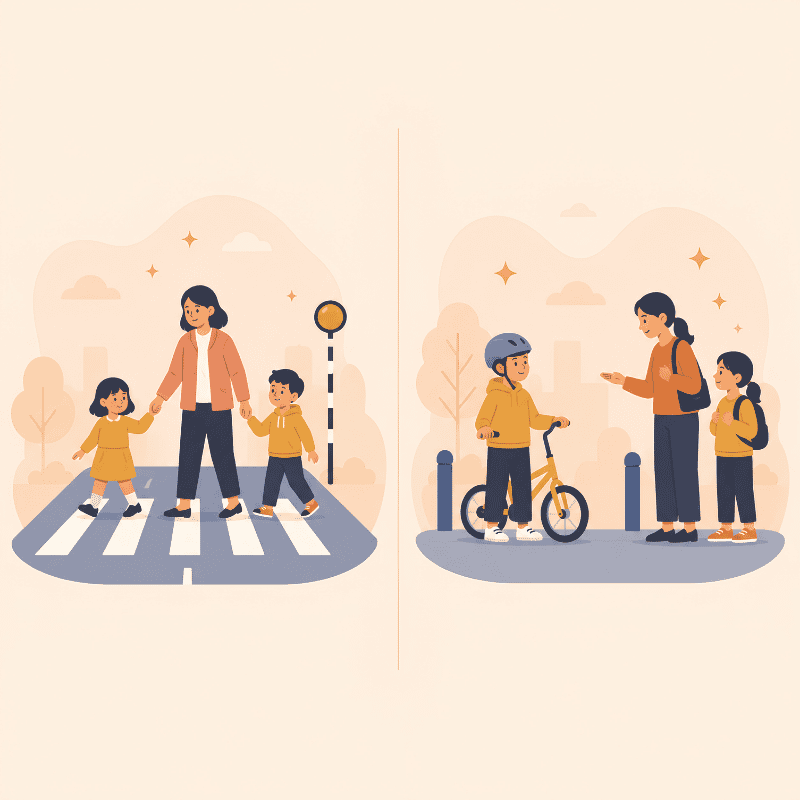
PSHE leads can organise progression through knowledge, judgement and rehearsal: what pupils understand, how they compare choices and the language or routines they practise.

The Department for Transport’s THINK! education resources group materials broadly for ages 3 to 6 and 7 to 12 rather than prescribing a statutory year-by-year sequence. The model below is therefore a school-designed approach that leaders can adapt to pupils’ starting points, local travel patterns and levels of independence.

Reception to Year 2

Knowledge: recognise pavements, kerbs, roads and common crossings and know to stay with an adult near roads.

Judgement: choose a safer option from two clear examples.

Rehearsal: practise Stop, Look, Listen and Think, crossing with an adult and asking for help.

Years 3 and 4

Knowledge: understand visibility, distraction, junctions, driveways and parked vehicles.

Judgement: explain why one place or action is safer and recognise changing conditions.

Rehearsal: apply road safety principles to fictional car parks, bus stops and unfamiliar routes.

Years 5 and 6

Knowledge: understand route choice, visibility around large vehicles, peer influence and responsibilities as a pedestrian, cyclist or passenger.

Judgement: compare routes or responses and justify a safer plan when circumstances change.

Rehearsal: practise resisting pressure, reducing distraction, changing plans and seeking help.

Curriculum leader checks

Progression should increase the complexity of pupils’ knowledge and decisions rather than simply repeat the same activity. Planning should not suggest that every pupil will travel independently or that children are responsible for managing traffic risk. The Highway Code states that children should not be allowed out alone until they can understand and use the Green Cross Code properly and that parents and carers decide when this is safe.

A whole-school PSHE progression map can help leaders check that learning develops across phases and that road safety connects with personal safety, help-seeking and transition rather than appearing as an isolated event.

Map the statutory position accurately

Record road safety against the guidance in force: wider PSHE until 31 August 2026, then statutory primary Health Education from 1 September 2026.
Empty space, drag to resize

Effective road safety PSHE teaching strategies

Use locally relevant but fictional routes

Use fictional maps that reflect local features such as school gates, rural lanes, crossings, bus stops or busy car parks.

Do not mark pupils’ homes or ask for exact journeys. A believable fictional route provides context without creating privacy concerns.

Structure discussion around safer choices

Use third-person questions such as, “Which place gives Aisha the clearest view?”

Sentence stems can also support pupils who need help explaining their reasoning. Useful examples include, “A safer choice would be…”, “This could be more risky because…”, “The person might not be visible because…”

Combine active learning with structured reflection

Use role-play, image sorting, route ranking or hazard cards, followed by a brief explanation or exit question.

The reflection should test reasoning rather than trivia. “Which option is safer and why?” reveals more than asking pupils to repeat a slogan. The Muse PSHE assessment guide offers wider approaches to checking learning without turning PSHE into a written test.

Use official resources within a planned sequence

Official THINK! materials provide lesson plans, slides, games and curriculum maps for pupils aged 3 to 6 and 7 to 12. They can save planning time, but teachers should still select a precise outcome and adapt examples to the school’s context.

Avoid covering every message in one lesson. A short sequence gives pupils more opportunity to apply and revisit learning.
Empty space, drag to resize

Assessing road safety PSHE

Assess learning without requiring disclosure

Assess whether pupils can identify risk, compare options and justify a safer choice. Fictional scenarios provide evidence without requiring personal disclosure.

If a pupil shares concerning information, respond calmly and follow school safeguarding procedures.
Prioritise transfer over trivia: ask pupils to apply a principle to a new situation rather than simply name signs.

Plan purposeful revisiting

Revisit learning before trips, during darker months, alongside Bikeability, after local road changes and before transition.
Each revisit should add complexity by changing the weather, route, supervision or group dynamics.

PSHE leads can use the same approach when reviewing student wellbeing and mental health or selecting teacher resources and lesson planning materials: set a clear outcome, teach the knowledge explicitly and revisit it through a more demanding context.
Empty space, drag to resize

Road safety PSHE curriculum risks

  • Using outdated statutory framing. Map road safety against the guidance in force, including the change from September 2026.
  • Repetition without progression. Increase the complexity of knowledge, judgement and independence.
  • Using pupils’ personal journeys for assessment. Prefer fictional scenarios.
  • Ignoring local context. Rural roads, city junctions, car parks and scooter use create different needs.
Empty space, drag to resize

Road safety PSHE audit for curriculum leaders
Road safety lessons
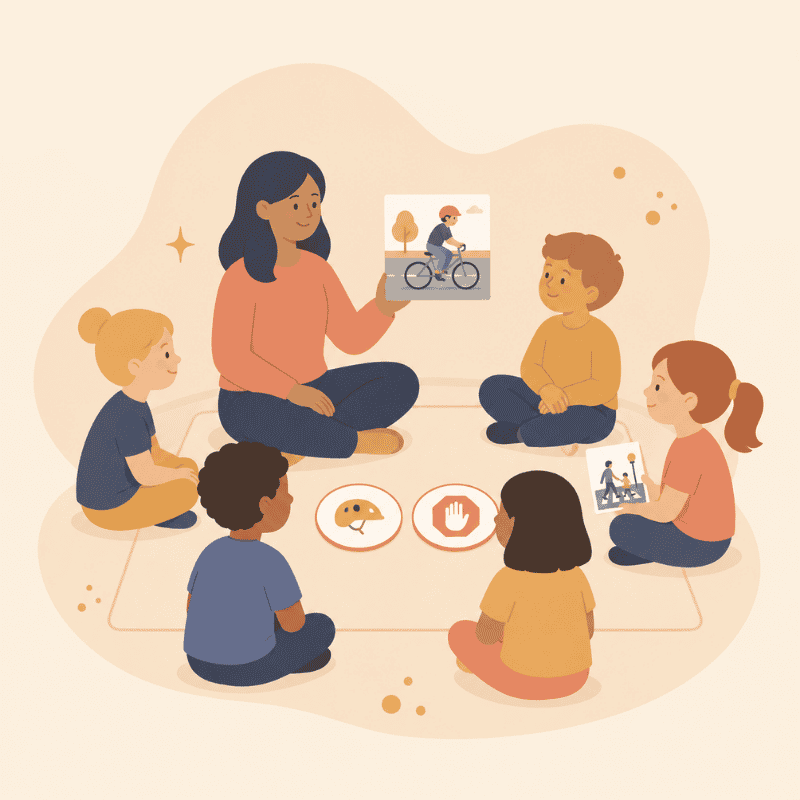
Audit where outcomes are missing, unclear or repeated without progression. Check how knowledge develops before and after each lesson.

Check for consistent language across lessons, trips, assemblies and communication with families.

For a wider review, use the Muse guide to PSHE statutory guidance. The Muse Wellbeing primary PSHE curriculum provides structured Reception to Year 6 progression, fully resourced lessons and guidance for subject leads.
Empty space, drag to resize

Frequently Asked Questions

Is road safety statutory in primary schools?

Until 31 August 2026, road safety may be taught through wider PSHE. From 1 September 2026, revised guidance places it within statutory primary Health Education for state-funded schools. Independent schools continue to meet the Independent School Standards.

What should a KS1 road safety lesson include?

A KS1 lesson should have one practical goal, such as using Stop, Look, Listen and Think or choosing a clearer place to cross with an adult. Use photographs, sequencing and short fictional scenarios.

How should Year 6 road safety lessons be different?

Year 6 lessons can use route choice, distraction, peer influence, public transport and changing plans. Prepare pupils for potentially greater independence without assuming every child will travel alone.

How can schools assess road safety without putting pupils on the spot?

Use fictional scenarios, route comparisons, quizzes and paired explanations. Assess whether pupils can explain why a choice is safer without describing their home life.

What should a teacher do if a pupil shares something worrying?

Listen calmly, do not investigate and follow the school’s safeguarding procedure. The current Keeping Children Safe in Education guidance applies until 31 August 2026, with the 2026 version applying from 1 September 2026.
Empty space, drag to resize

Road safety PSHE key takeaways

  • Start each lesson with one precise knowledge, judgement or rehearsal outcome.
  • Teach KS1 through adult-supported routines, then increase reasoning and independence through KS2.
  • Use the Green Cross Code and current official guidance as the foundation for classroom messages.
  • Use realistic but fictional scenarios so pupils can apply learning without disclosing personal details.
  • Map road safety against the guidance in force: wider PSHE until 31 August 2026, then statutory primary Health Education from 1 September 2026.

Explore the Muse Wellbeing primary PSHE curriculum

Support your school with clear year-group progression, fully resourced lessons, teacher guidance and consistent curriculum language from Reception to Year 6. Muse Wellbeing includes 12 Reception sessions and 216 fully resourced lessons across Years 1 to 6.
Created with