

Contents
What schools need before communicating with families
A practical model for family engagement in PSHE and RSE
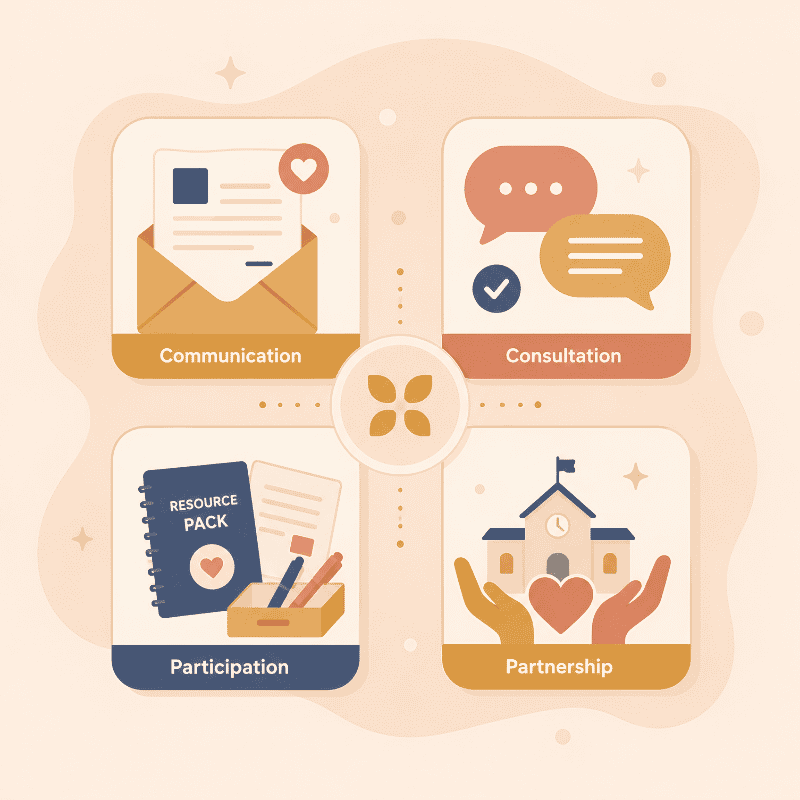
1. Communication
2. Consultation
3. Participation
4. Partnership
What this looks like across a school year
Build a clear communication model before concerns arise
Start with a year-round plan, not a one-off letter
Use a family communication checklist
Use accessible channels, but keep the core information consistent
Give staff a shared response and escalation route
Consultation, policy and parental rights
Consultation is more than sending information home
Keep policy, curriculum and communication aligned
Explain parental rights accurately
Sharing PSHE and RSE materials with families

What to share
How to share materials with context
Be transparent about access and copyright
Record requests and keep the process manageable
Whole-school roles and trust-wide consistency
Trust-wide consistency without losing local engagement
Brief staff and agree escalation routes
Frequently Asked Questions
How early should schools communicate with parents and carers about PSHE and RSE?
Give families a broad overview near the start of the academic year and focused notice before puberty or additional primary sex education. The guidance sets no fixed minimum notice period, so allow enough time to read the information, ask questions and view planned materials. Primary schools should consult parents before the final primary year about the detailed content of any sex education they plan to teach.
What is the difference between informing families and consulting parents?
Informing explains what will be taught, when and how. Consulting invites feedback while a policy or approach is being developed or reviewed, then shows how responses were considered. Consultation must be genuine, but it is not a vote and does not give parents a veto over statutory content.
What should a good PSHE parent and carer questionnaire include?
Ask whether families understand the curriculum, statutory distinctions, withdrawal rights, resource-access process and contact route. Identify unanswered questions, language or accessibility barriers and useful practical support. Do not frame the questionnaire as a vote on statutory content.
Should schools share lesson materials with parents and carers?
Schools should respond positively and provide access to the materials planned for the child, with enough classroom context to explain their use. Provide examples during policy consultation. Full packs need not be published publicly: a guided viewing, presentation, secure portal or another reasonable route may be suitable. Copyright does not prevent materials being shown on school premises, and pupil information must be protected.
Can parents withdraw a primary pupil from PSHE or Relationships Education?
There is no general right to withdraw from PSHE, statutory Relationships Education, statutory Health Education or national curriculum science. Parents may withdraw a primary pupil from sex education beyond national curriculum science, and the headteacher must comply. Clarify the scope, record the decision and provide purposeful education during the withdrawal.
What should multi-academy trusts lead centrally?
Trusts can agree minimum policy expectations, statutory wording, safeguarding and equality principles, resource-access arrangements, consultation steps and templates. The scheme of delegation should identify retained and delegated functions. Schools should still adapt dates, accessible communication routes and local examples.
How often should schools review their family engagement approach?
Review the approach at least annually alongside curriculum and policy planning, and sooner after consultation, a significant concern, changes to content or resources or new statutory guidance. Record actions through the normal subject-development process.
Key takeaways
Conclusion
Latest from our blog

Muse Wellbeing
About
Support
Subscribe for RSHE & Wellbeing Updates & Learning Resources

Created with