
Contents
What you'll need before you begin
Audit what each year group already teaches
Gather the real picture, not the ideal one
Record the activity type as well as the topic
Identify where staff confidence affects coverage
Organise progression through recurring strands
Choose a small number of strands to track
Define how complexity and learning will grow
Use progression verbs
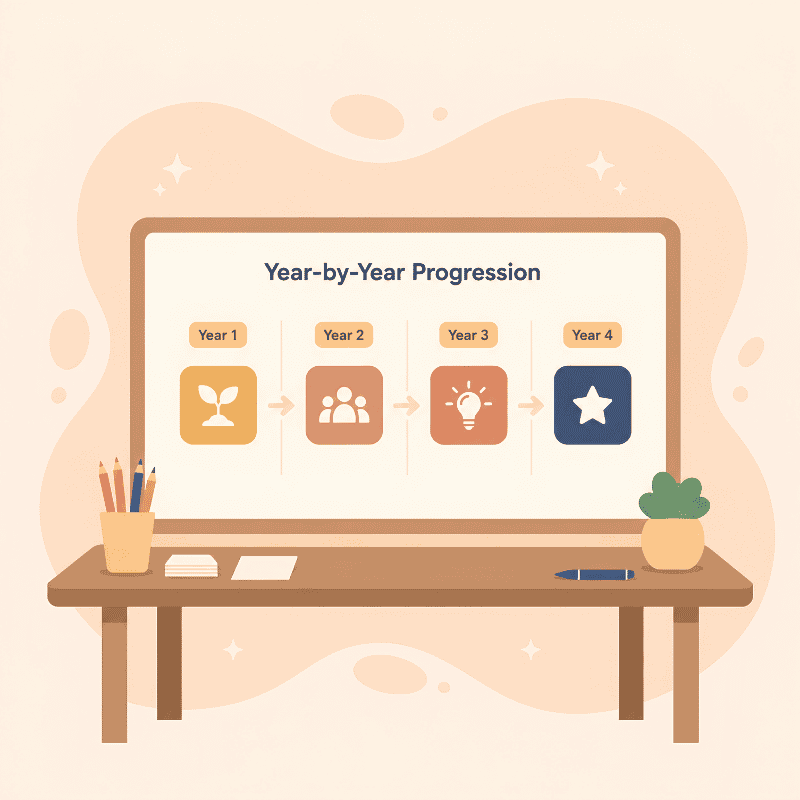
Year-by-year PSHE progression overview
A quick PSHE topic coverage checklist
Build Year 1 and Year 2 activities with secure foundations
Plan Year 1 around pupils' immediate world
Extend independence in Year 2
Keep recording light but purposeful
Build Year 3 and Year 4 activities that deepen learning
Use Year 3 to bridge from KS1 to fuller discussion
Make Year 4 more comparative and reflective
Revisit familiar strands through a sharper lens
Plan purposeful PSHE activities for Year 5 and Year 6
Treat Year 5 as a preparation year, not simply an older Year 4
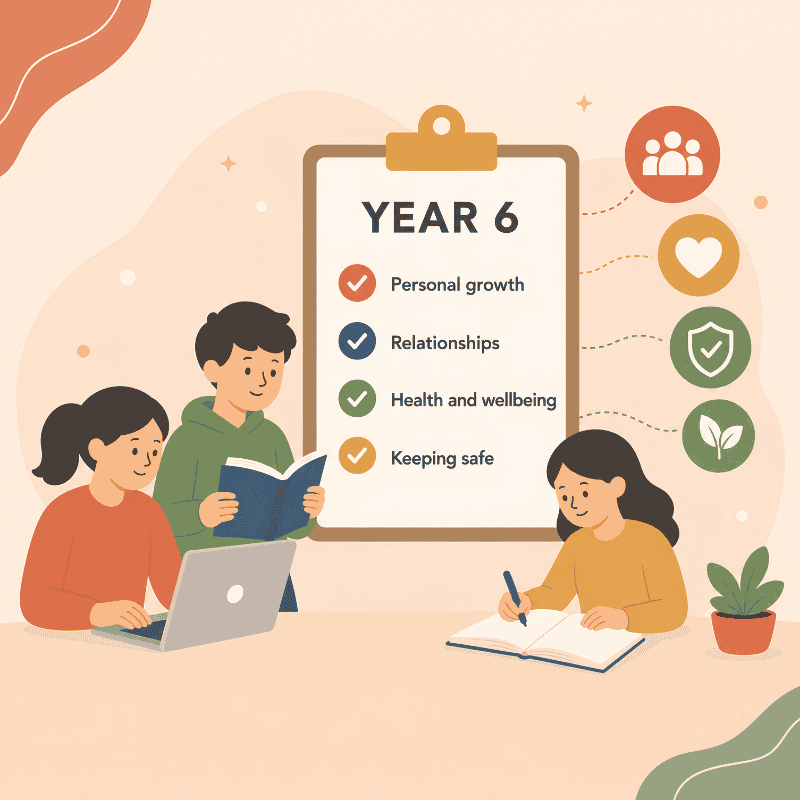
Use Year 6 for application, judgement and transition
Plan end-of-year activities that look back and forward
Adapt activities across every year group for SEND and diverse needs
Check for repetition, gaps and end-of-year fit
Read down each strand from Year 1 to Year 6
Check that staff can deliver the curriculum consistently and safely
Assessment in PSHE: How to show impact without grades
Use a clear baseline
Check understanding during teaching
Return to the learning at the endpoint
Keep whole-school evidence proportionate
Planning risks to avoid
Repeating themes without increasing demand
Making Year 6 the place for everything difficult
Confusing coverage with progression
Overwriting lessons for younger pupils
Ignoring teacher usability
What to do next
Frequently Asked Questions
How do I know if a PSHE activity shows progression rather than repetition?
Look at what pupils are being asked to know and do, not only the topic heading. Within friendships, for example, Year 1 pupils might recognise kind and unkind behaviour, Year 3 pupils might rehearse an assertive response and Year 6 pupils might evaluate pressure and consequences. If the knowledge, activity and level of reasoning remain almost the same, the learning is being repeated rather than deepened.
How many PSHE activities should each year group have in a term?
There is no statutory number of PSHE activities or lessons per term. Leaders should start with the required content, intended progression and sufficient teaching time, then decide how this fits the timetable. A regular weekly lesson can provide a clear rhythm, but the key test is whether pupils receive planned, sequenced teaching rather than disconnected activities.
Should Year 1 and Year 2 cover the same broad PSHE themes?
Often, yes. DfE guidance sets end-of-primary expectations rather than prescribing separate content for every year group. Important strands such as relationships, safety and health should therefore be revisited, with Year 1 often focusing on naming, recognising and practising and Year 2 explaining choices, noticing consequences and applying simple strategies.
What are good PSHE group activities for mixed-attainment primary classes?
Short scenarios, paired talk, sorting, ranking, role-play and structured discussion can all work well. Keep the intended learning and any safeguarding outcome clear, then adapt vocabulary, visuals, processing time, sentence stems and how pupils communicate or demonstrate understanding.
Do PSHE end-of-year activities need to be different from ordinary lessons?
They do not need to be novel, but they should serve a clear purpose. Effective end-of-year activities help pupils consolidate learning, identify strengths, prepare for change and understand where support will be available.
How can Year 6 PSHE activities prepare pupils well for transition?
Use realistic situations such as changing friendships, organisation, travel, asking for help, online reputation and managing worry. Give pupils opportunities to test advice, weigh choices and identify support rather than introducing a large amount of new content at the end of the year.
How can a PSHE lead keep progression manageable for busy teachers?
Keep documents concise, language consistent and expectations realistic. Identify the essential knowledge, suggested activity type, core vocabulary and practical guidance for adaptation. Make resources easy to access and review the map with teachers so it supports classroom practice rather than becoming a leadership document only.
What are common PSHE topics in primary schools?
Common topics include relationships and families, feelings and mental wellbeing, physical health, keeping safe, online safety, bullying and discrimination, citizenship, economic wellbeing, careers and growing and changing. Schools should identify which content meets statutory Relationships Education and Health Education requirements and which forms part of wider PSHE, while planning one coherent programme.
What do pupils learn in Year 6 PSHE?
DfE guidance sets outcomes for the end of primary rather than prescribing a national Year 6 PSHE curriculum. Schools often use Year 6 to apply earlier learning to increasing independence and transition, including changing relationships, pressure, online privacy and reputation, help-seeking, safety, growing and changing and preparation for secondary school.
Key takeaways
Conclusion
Latest from our blog

Muse Wellbeing
About
Support
Subscribe for RSHE & Wellbeing Updates & Learning Resources

Created with