Contents
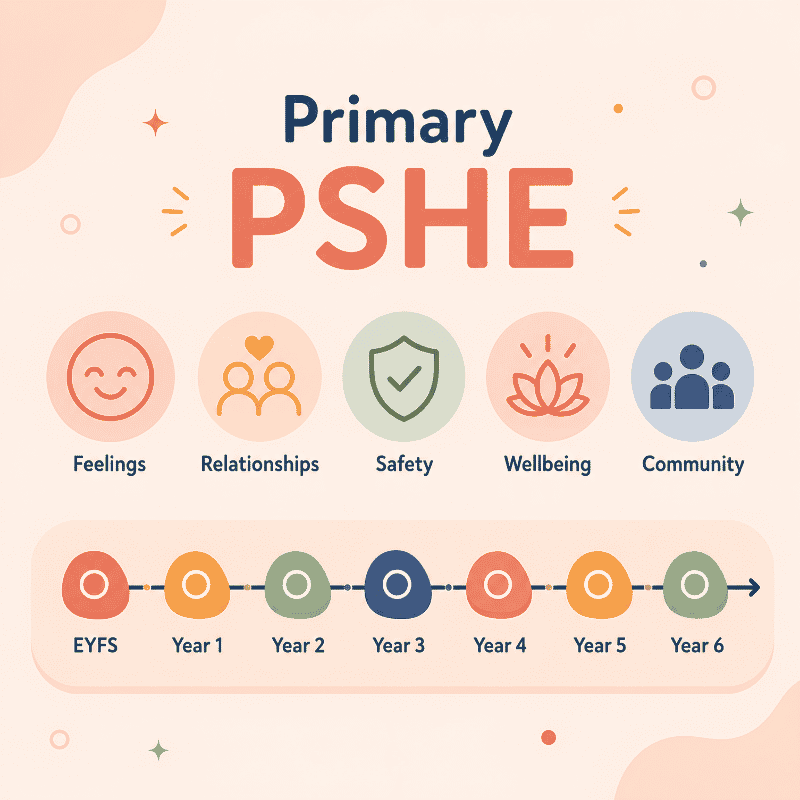
What a whole-school PSHE curriculum needs
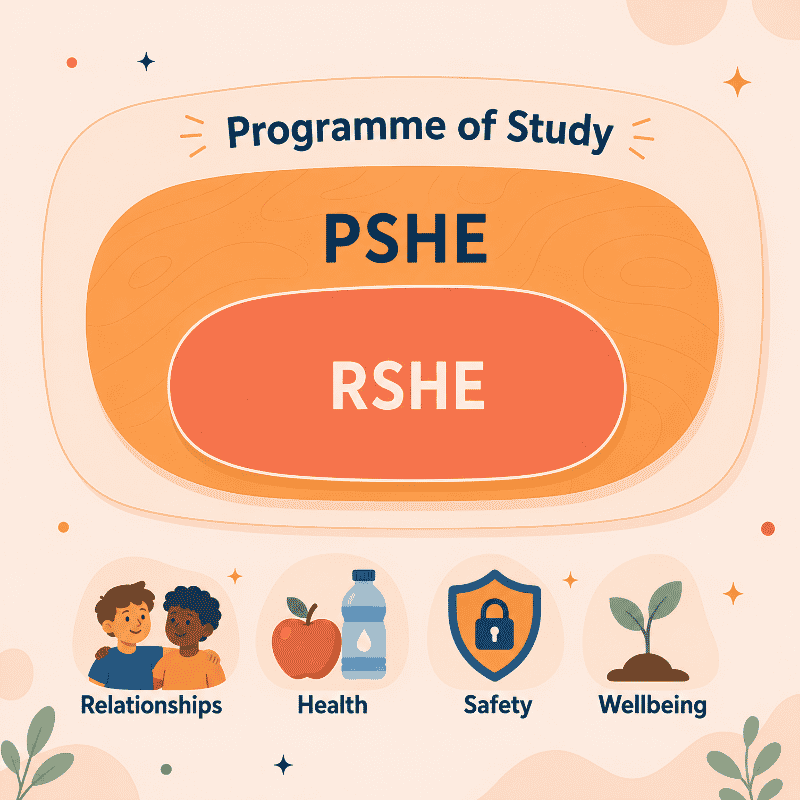
How PSHE, RSHE and a programme of study fit together
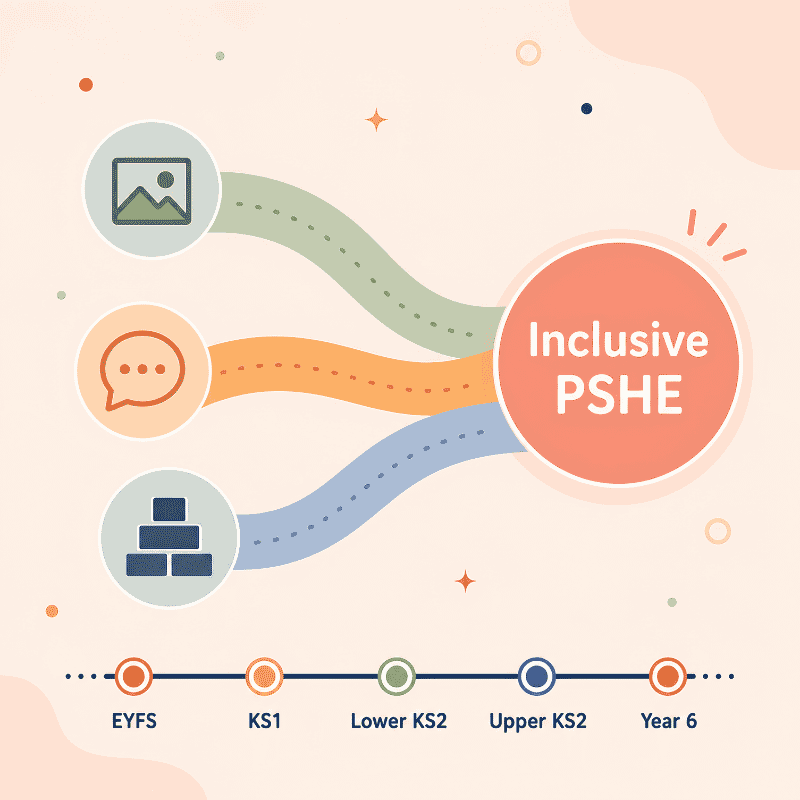
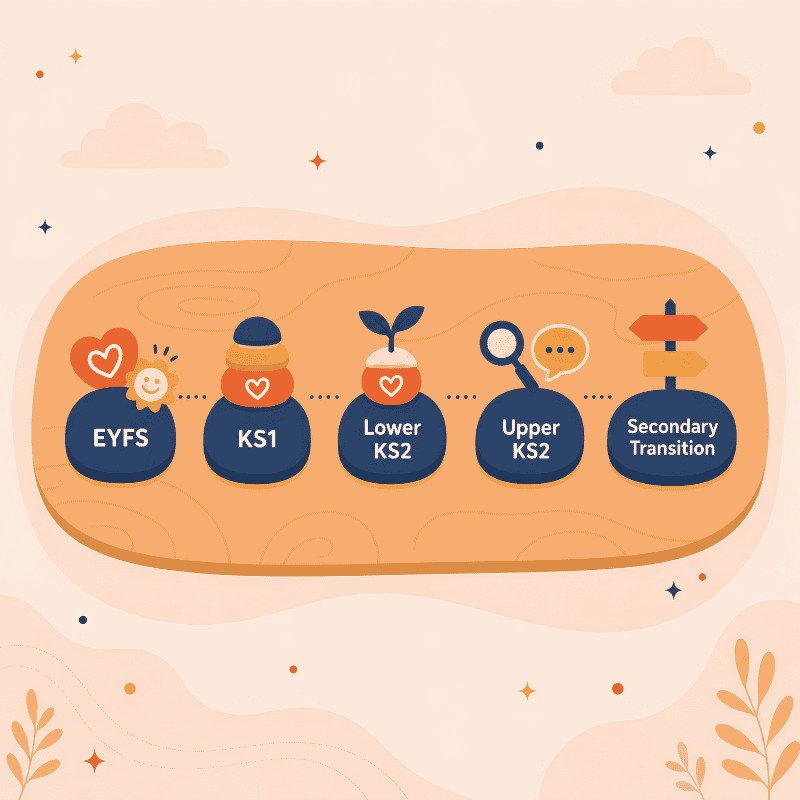
The EYFS to Year 6 curriculum journey
EYFS: building the foundations
Key Stage 1: keeping learning close to children's lives
Lower Key Stage 2: widening understanding
Upper Key Stage 2: deepening judgement and preparing for change
Progression and mapping across the school
Knowledge
Vocabulary
Application
Planning for inclusion and SEND in PSHE
Statutory coverage and topic design
Implementation: resourcing, lesson design and a safe PSHE classroom climate
Creating a safe classroom climate
Handling questions and disclosures
Choosing and checking resources
Assessment in PSHE
Refreshing the scheme without rewriting everything
Related PSHE planning guides
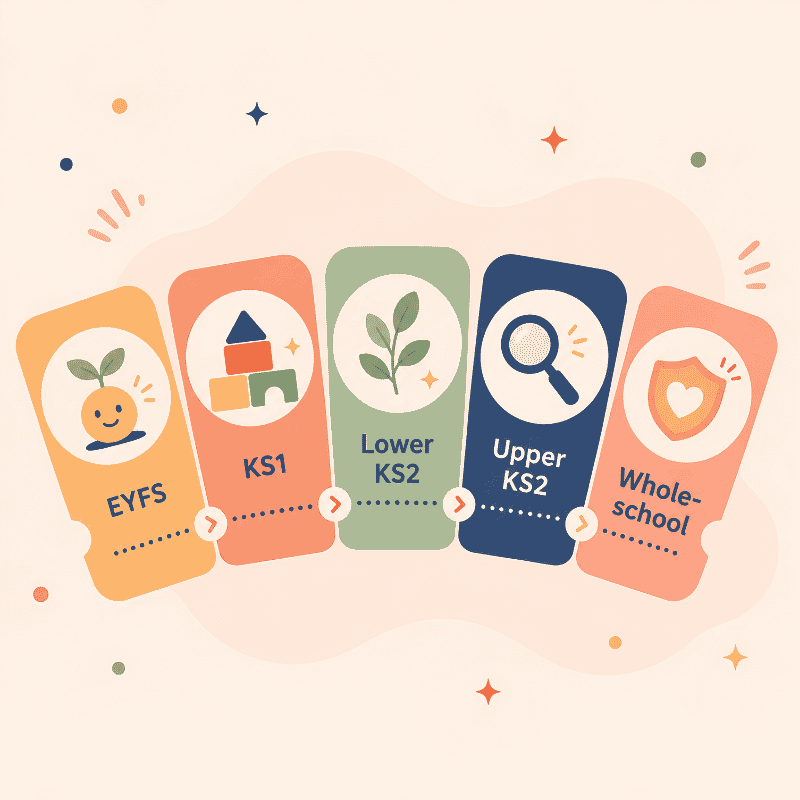
... PSHE in the Early Years: What EYFS Pupils Should Learn About Wellbeing
... PSHE Progression Map
... PSHE Statutory Guidance for Primary Schools
... PSHE Topics for Primary Schools
... PSHE in Key Stage 1
... The PSHE Curriculum in Key Stage 2
Curriculum planning risks to check
Where to go next
Frequently Asked Questions
What is the PSHE curriculum in primary schools?
The primary PSHE curriculum supports pupils' personal, social, health and economic development. It commonly includes relationships, physical and mental health, safety, online life, economic wellbeing, community and personal development. In England, Relationships Education is compulsory for all primary pupils, while Health Education is compulsory in state-funded schools.
Should EYFS be included in whole-school PSHE planning?
Yes. EYFS should be included as the foundation of the journey, but it should not be forced into a formal Key Stage 1 model. Reception learning develops through Personal, Social and Emotional Development and other EYFS areas, supported by play, routines, modelling, stories, talk and age-appropriate planned sessions.
How do you structure PSHE from EYFS to Year 6?
Start with a small number of consistent strands. Identify what pupils should know in each strand, the vocabulary they need and how they will apply learning. Map statutory content, then sequence learning so that important themes return with greater depth, independence and complexity.
How do you avoid repetition between Key Stage 1 and Key Stage 2?
Use a progression map and revisit themes at a higher level of demand. Key Stage 1 may focus on naming, recognising and choosing between simple responses. Lower Key Stage 2 can move into explanation and comparison. Upper Key Stage 2 should include influence, consequences, responsibility and more independent judgement.
Does every school need its own PSHE scheme of work?
Every school needs a scheme of work that reflects its pupils, statutory duties and curriculum intent. Schools do not need to write every lesson from scratch. They can use or adapt an existing scheme, provided leaders understand its progression, check its coverage and make appropriate adjustments for local context.
How often should PSHE be taught in primary school?
Many schools protect a regular weekly lesson because this supports continuity and makes progression easier to secure. Other models can work, but PSHE should not depend mainly on occasional theme days or assemblies. Whatever timetable is chosen should provide enough regular, planned teaching to cover the curriculum properly.
Is PSHE statutory in primary schools?
PSHE as a complete subject is not statutory in the same way as national curriculum subjects. However, Relationships Education is compulsory in all primary schools in England and Health Education is compulsory in state-funded schools. Relevant science content is also statutory where schools follow the national curriculum. Schools usually teach these requirements within a wider PSHE programme.
Is sex education compulsory in primary schools?
Sex education beyond national curriculum science is not compulsory in primary schools. The Department for Education recommends that primary schools provide an age-appropriate programme tailored to pupils' physical and emotional maturity. Schools that teach additional sex education must set it out in policy, consult parents and provide the relevant right of withdrawal.
How should PSHE be adapted for pupils with SEND?
Keep the essential learning and safeguarding messages consistent, then adapt language, examples, pacing, scaffolding and response methods. Visuals, pre-taught vocabulary, concrete scenarios, repetition and supported practice can help pupils understand and use the learning.
Who should lead PSHE curriculum planning?
A named PSHE or RSHE lead should coordinate the curriculum, ideally with sufficient senior support and time. Effective planning also involves the designated safeguarding lead, SENDCo, EYFS staff, phase leaders and class teachers. This helps ensure that the written sequence works in practice.
How can small schools manage progression in mixed-age classes?
Use a carefully mapped rolling programme and record what each cohort has already studied. The same broad lesson can sometimes be taught across ages, but expected vocabulary, reasoning and application should differ. End points must remain clear so that pupils do not repeat the same level of learning each cycle.
What should a good PSHE lesson include?
A strong lesson has a clear learning intention, accurate age-appropriate content, structured discussion, safe distancing techniques, a consistent help-seeking message and a simple way to check understanding. Teachers should also know how the lesson connects with previous and future learning.
What are some common PSHE topics?
Common topics include feelings, friendships, families, respect, personal safety, online safety, physical health, mental wellbeing, hygiene, puberty, money, community, careers, responsibility and transition. These topics should be organised into a progressive sequence rather than taught as unrelated one-off sessions.
Key takeaways
Conclusion
Explore the Muse Wellbeing primary PSHE curriculum
Latest from our blog

Muse Wellbeing
About
Support
Subscribe for RSHE & Wellbeing Updates & Learning Resources

Created with