PSHE Topics for Primary Schools
Authored by the Muse Wellbeing Team
First Published on the 4th of May, 2024.
Reviewed and updated on the 12th of February, 2026.
Reviewed and updated on the 12th of February, 2026.
Lead Writer
David is a qualfied British teacher and the Muse Wellbeing director and lead curriculum developer. His main passions include education, surfing (badly) and travel.
Editor and Review
With over 15 years of experience teaching in primary schools in northern England, Charlotte has played a key role in shaping many lessons across the Muse Wellbeing curriculum.
PSHE Topics for Primary Schools
Personal, Social, Health and Economic (PSHE) education in primary schools is designed to equip pupils with the knowledge and skills they need to navigate everyday life. By exploring topics such as health, relationships and personal safety, PSHE supports children’s social, emotional and personal development from an early age.
These themes play an important role in building strong foundations, helping pupils to make informed decisions, manage challenges and act in ways that support their own wellbeing and that of others. This is increasingly important, as recent data from NHS England shows that around 1 in 5 children and young people had a probable mental disorder in 2023. When delivered effectively, PSHE can help primary school pupils develop confidence, resilience and the skills needed to prepare them for future learning and life beyond the classroom.
These themes play an important role in building strong foundations, helping pupils to make informed decisions, manage challenges and act in ways that support their own wellbeing and that of others. This is increasingly important, as recent data from NHS England shows that around 1 in 5 children and young people had a probable mental disorder in 2023. When delivered effectively, PSHE can help primary school pupils develop confidence, resilience and the skills needed to prepare them for future learning and life beyond the classroom.
Promoting Health and Wellbeing in Schools
Promoting health and wellbeing is a core part of PSHE education. By focusing on both physical and mental health, schools can help pupils understand the importance of self-care, healthy lifestyles and emotional resilience, supporting them to make positive choices now and in the future.
Research published by Public Health England highlights that well-designed, health-focused school programmes are associated with improvements in pupil behaviour, wellbeing and engagement with learning. Such programmes also support children’s understanding of healthy eating, physical activity and emotional regulation, contributing to a positive school culture and a supportive learning environment.
Research published by Public Health England highlights that well-designed, health-focused school programmes are associated with improvements in pupil behaviour, wellbeing and engagement with learning. Such programmes also support children’s understanding of healthy eating, physical activity and emotional regulation, contributing to a positive school culture and a supportive learning environment.
Core PSHE Topics in Primary Schools
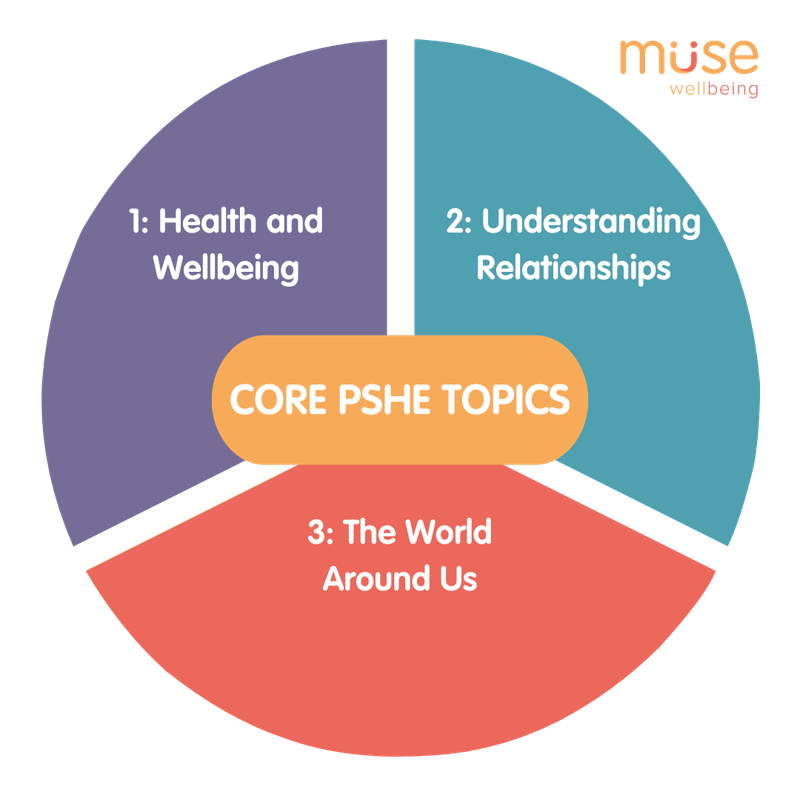
The core PSHE topics cover a wide range of essential life skills, providing children with important knowledge and practical strategies to support their learning, wellbeing and personal development. At primary school level, PSHE is typically organised into three main areas:
Each of these areas plays an important role in supporting pupils’ development into responsible, empathetic and resilient individuals, as reflected within the Muse Wellbeing curriculum.
- Health and Wellbeing
- Understanding Relationships
- The World Around Us
Each of these areas plays an important role in supporting pupils’ development into responsible, empathetic and resilient individuals, as reflected within the Muse Wellbeing curriculum.
Relationships Education and Health Education are statutory subjects in primary schools and are commonly delivered through timetabled PSHE lessons. This ensures that learning about relationships, health and wellbeing is embedded within a broader PSHE curriculum that supports children’s personal, social and emotional development.
The following sections outline the core components of the PSHE curriculum in more detail.
The following sections outline the core components of the PSHE curriculum in more detail.
1. Health and Wellbeing
PSHE lessons place strong emphasis on both physical and mental health, supporting pupils to develop habits that contribute to their overall wellbeing. Through these lessons, primary-aged children learn the importance of nutrition, regular physical activity and emotional self-care, alongside practical ways to apply these ideas in everyday life. By exploring healthy habits from an early age, PSHE helps pupils understand how to care for and support both their bodies and minds.
2. Understanding Relationships
Developing positive social skills is a key element of PSHE. Lessons focus on helping pupils build and maintain healthy relationships by exploring concepts such as empathy, kindness, respect and cooperation. These skills support children in working effectively with others, forming positive friendships and contributing to a supportive classroom and school community.
3. The World Around Us
This area of PSHE supports pupils’ understanding of global citizenship, community involvement and economic wellbeing. Pupils learn about the importance of being responsible and active members of society at both a local and global level. They explore how individual actions can impact the wider world, developing awareness of sustainability, social responsibility and positive contribution. Lessons on economic wellbeing also introduce pupils to age-appropriate ideas around money, resources and personal growth.
Muse Wellbeing’s Approach to PSHE
The Muse Wellbeing scheme of work takes a considered and effective approach to delivering PSHE education in primary schools. By incorporating interactive teaching methods such as storytelling, role play and group discussion, Muse Wellbeing supports a PSHE curriculum that keeps pupils engaged, helps them understand key ideas clearly and encourages them to apply learning in their own lives. These hands-on approaches help to make complex topics more accessible and age appropriate for children.
The Muse curriculum focuses on student-centred learning that encourages active participation in the classroom. Through interactive activities, pupils develop important knowledge and skills that support personal development while also enjoying the learning process and contributing confidently to class discussions. The flexible nature of the Muse Wellbeing curriculum allows teachers to adapt lessons to meet the needs of their pupils, supporting inclusive and effective learning.
Muse Wellbeing places a strong emphasis on emotional health and social skills, recognising their importance in supporting children’s wider development. By focusing on emotional literacy and positive interaction, the curriculum helps pupils learn how to manage emotions, build healthy relationships and work collaboratively with others.
The Muse curriculum focuses on student-centred learning that encourages active participation in the classroom. Through interactive activities, pupils develop important knowledge and skills that support personal development while also enjoying the learning process and contributing confidently to class discussions. The flexible nature of the Muse Wellbeing curriculum allows teachers to adapt lessons to meet the needs of their pupils, supporting inclusive and effective learning.
Muse Wellbeing places a strong emphasis on emotional health and social skills, recognising their importance in supporting children’s wider development. By focusing on emotional literacy and positive interaction, the curriculum helps pupils learn how to manage emotions, build healthy relationships and work collaboratively with others.
Empowering Primary Students Through PSHE
PSHE education empowers primary school pupils by equipping them with essential life skills that extend beyond the classroom. Through age-appropriate PSHE topics, pupils develop understanding of personal health, relationships and decision-making, supporting their growth into well-rounded individuals who can contribute positively to their school communities and the wider world.PSHE lessons help children develop the skills needed to navigate challenges, act responsibly and build positive relationships. By focusing on health, social skills and safety, PSHE prepares pupils for both immediate and future situations. Skills such as recognising and managing emotions, forming healthy relationships and staying safe online and offline help build confidence and resilience, supporting pupils both in school and beyond the classroom.
PSHE Topics and Lifelong Learning
Building a strong framework around key PSHE topics during primary school plays an important role in developing responsibility, resilience and empathy in young learners. By exploring areas such as health, relationships and community awareness, PSHE supports pupils in developing the skills they need to navigate life both within school and the wider world.
Muse Wellbeing’s approach to PSHE education strengthens these foundations by providing teachers with practical tools, effective teaching approaches and engaging lessons that are relevant and accessible for primary-aged learners.
Muse Wellbeing’s approach to PSHE education strengthens these foundations by providing teachers with practical tools, effective teaching approaches and engaging lessons that are relevant and accessible for primary-aged learners.

Muse Wellbeing
Subscribe for RSHE & Wellbeing Updates & Learning Resources
Receive essential information on RSHE and wellbeing for your school and community
Thank you!

Copyright © 2026 Muse | All Rights Reserved.
Would you like to logout of Muse Wellbeing?
Created with