Healthy Eating in KS1 and KS2
Mar 20
/
Muse Wellbeing

Author: David
David is the Muse Wellbeing director and lead curriculum developer. His Main passions include education, surfing and travelling.
David is the Muse Wellbeing director and lead curriculum developer. His Main passions include education, surfing and travelling.

Edited/Reviewed: George
George is an international school teacher based in Asia. A passionate language learner and polyglot, he thrives in diverse classrooms.
George is an international school teacher based in Asia. A passionate language learner and polyglot, he thrives in diverse classrooms.
Healthy eating in Key Stage 1 (KS1) and Key Stage 2 (KS2) is an important area of learning in primary school because it helps children develop habits that can support their health, energy levels and wellbeing. Schools can teach healthy eating in a way that is supportive and helps pupils make informed decisions about what they eat.
This learning should not be too prescriptive or restrictive, and it should not create worry around food in the future. Instead, the goal is to help pupils understand what a balanced diet looks like, learn how to make positive choices and develop a healthy attitude towards food.
Healthy Eating and Pupil Wellbeing
Healthy eating has a clear link to pupil wellbeing. Pupils use the energy from food to learn, play, focus, participate and take part fully in school life. Alongside this, food also connects to wider ideas around self-care, routine and how daily choices can affect how we feel.
Because of this, healthy eating is an important area of learning for primary schools. Primary-aged pupils do not need overly complex nutrition information. They need simple and clear educational messages that help them understand the idea of a balanced diet over time. The NHS Eatwell Guide is a helpful resource because it presents healthy eating as balance and variety rather than perfection.
This link between healthy eating and classroom learning matters because pupils are already developing attitudes and habits around food. Some pupils may arrive at school with a strong understanding of healthy routines, while others may need more support. Schools should offer accurate, reliable information about healthy eating and help pupils build the vocabulary they need to talk about food, health and wellbeing.
Teaching Healthy Eating Through PSHE
Healthy eating fits naturally within PSHE because it is about much more than learning facts. It is also about attitudes, choices and the routines that shape everyday life. If this is part of your curriculum, our blog on what PSHE stands for gives additional context on the wider subject and its place in primary education.
Healthy eating is a strong example of how PSHE can be delivered well. This is because the topic is both practical and relevant to children’s lives. In PSHE lessons, healthy eating can be taught through discussion, sorting activities, simple scenarios and reflection tasks. Children might explore what makes up a balanced plate, think about healthy routines across the school day or discuss how food and drink choices can affect concentration and energy. The focus should always remain educational and supportive rather than moralistic.
Good quality resources also play an important role. For example, Muse Wellbeing supports schools in exploring healthy eating in a clear, visual and age-appropriate way. This can help teachers introduce the topic with confidence and create discussion around how food, routine and wellbeing are connected.
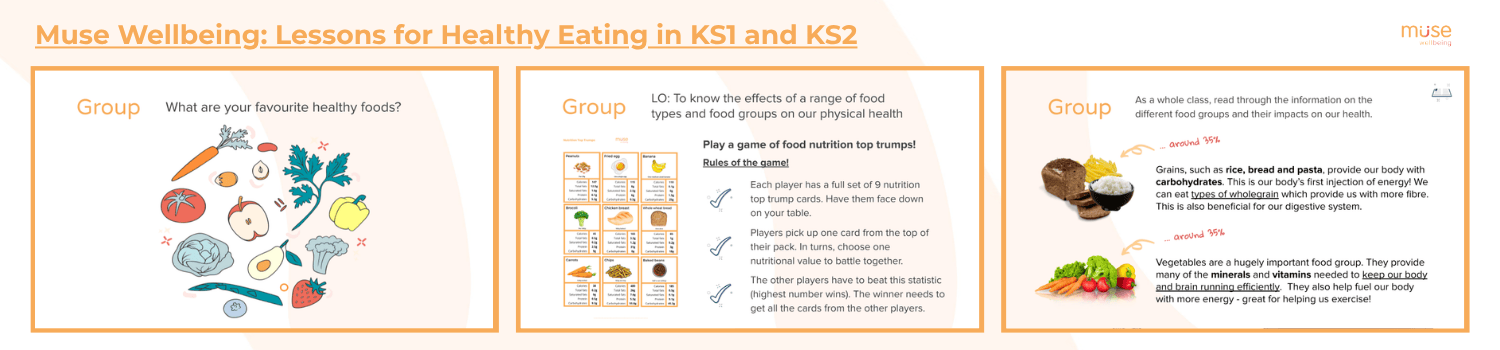
The PSHE Association’s Food for Thought resources are also a useful example of how healthy eating can be explored in PSHE lessons through thoughtful classroom discussion.
Healthy Eating Learning in KS1
Healthy eating education in KS1 should usually be simple, clear and connected to children’s daily lives. At this age, pupils are just starting to understand routine, pattern and how food helps their bodies grow, move and stay healthy.
In KS1, teachers will usually focus on helping pupils recognise healthy habits rather than develop detailed knowledge. Pupils may learn that breakfast is important, that drinking water matters, that eating a range of foods is helpful and that some foods help our bodies more often than others. They may also begin to name a few food groups in a simple way and talk about what makes a balanced lunch or snack.
Healthy eating learning is often most effective when it is linked to real-life practice. For example, pupils may sort foods into categories, discuss meals, spot healthy habits in picture cards and talk about routines that help them feel ready for the school day. Teachers can use simple vocabulary and relatable examples to make learning feel inclusive for all pupils.
KS1 healthy eating education also supports broader emotional development. As pupils begin to understand the link between daily habits and how they feel, they are developing self-awareness. This connects well to wider wellbeing learning, including ideas explored in our Six Ways to Wellbeing blog.
Healthy Eating Learning in KS2
In KS2, learning around healthy eating can broaden and become more reflective. Pupils will usually have enough experience of making food choices to start thinking more deeply about what influences those choices and what a balanced diet looks like over time.
KS2 pupils can take part in richer discussions, as long as they remain age-appropriate and supportive. Lessons can go beyond simply identifying healthy foods. Pupils can be encouraged to think about how food supports growth, physical activity, concentration and general wellbeing. They can also consider how habits are formed and why healthier routines can become easier when they are part of daily life.
KS2 is also a good opportunity to develop more independent thinking. For example, pupils may be asked to look at lunch examples, discuss advertising and influence or reflect on how food choices are shaped by convenience, preference and routine. This helps pupils think more carefully rather than simply follow rules.
Healthy eating in KS2 can also connect to the wider curriculum. Many schools link it with Science, PE and other health education topics so that pupils can see that wellbeing is not just one lesson theme. The School Food Standards practical guide supports this broader view of the school’s role.
Healthy Eating Activities for Primary Schools
The most effective healthy eating activities are often simple, engaging and focused on discussion. Children usually learn best when they can apply an idea rather than just repeat facts. For example, primary schools might use tasks that ask pupils to sort foods into groups, plan a balanced meal, discuss healthy swaps or reflect on routines that support energy and focus.
Teachers can also use scenarios to make the learning feel more relevant. Children could think about what helps someone feel ready for sports day, a school trip or a busy learning morning. This helps the topic feel connected to real life rather than abstract.
Visual prompts also work well when discussing food in a safe and structured way. Pictures, slides and simple examples can help teachers guide pupil discussion. Short paired talk, whole-class questioning and reflection activities can all help children build understanding together. If you are reviewing your wider curriculum offer, our PSHE topics blog may be useful. It shows how healthy eating fits within a broad and balanced approach to PSHE.
When taught well, healthy eating in KS1 and KS2 should feel positive, practical and rooted in everyday school life. It helps pupils understand balance, build healthy habits and make informed choices that support their wellbeing. Schools can teach this topic through a PSHE approach that is calm, relevant and accessible to all pupils.

Better Wellbeing for all
school communities
school communities
Muse Wellbeing
Subscribe for RSHE & Wellbeing Updates & Learning Resources
Receive essential information on RSHE and wellbeing for your school and community
Thank you!

Copyright © 2026 Muse | All Rights Reserved.
Are you ready to logout of Muse Wellbeing?
Write your awesome label here.
Created with