PSHE: Living In The Wider World
Apr 7
/
Muse Wellbeing
Author: David
David is the Muse Wellbeing director and lead curriculum developer. His Main passions include education, surfing and travelling.
David is the Muse Wellbeing director and lead curriculum developer. His Main passions include education, surfing and travelling.

Edited/Reviewed: George
George is an international school teacher based in Asia. A passionate language learner and polyglot, he thrives in diverse classrooms.
George is an international school teacher based in Asia. A passionate language learner and polyglot, he thrives in diverse classrooms.
Within PSHE lessons, the key topic Living in the Wider World helps children understand the communities, responsibilities and opportunities around them. In primary schools, this area of learning supports pupils in making sense of money, citizenship, media, work, safety and their growing place in society. At Muse Wellbeing, we teach this strand through The World Around Us term 3 topic, helping schools explore these themes in a way that feels practical, age-appropriate and closely connected to children’s daily lives.
What Is PSHE: Living in the Wider World?
Living in the Wider World is one of the three core themes of PSHE education. As the PSHE Association explains, this area includes learning about shared responsibilities and communities, economic wellbeing, aspirations and careers, and digital and media literacy.
This makes it an important part of primary education. This makes it an important part of primary education. Children are developing an understanding of how the wider world works. They are also beginning to recognise their own role within it. In the classroom, that can include understanding why rules matter, how communities function, what money is used for, how media messages can shape choices and how individual actions affect other people.
For teachers, this strand provides a strong bridge between school life and the wider world. It gives pupils the language and knowledge to talk about their place in school, at home, online and within their local and wider communities. That is one of the reasons this theme is so valuable. It helps children connect learning to life in a meaningful way.
Why Living in the Wider World Matters in Primary Schools
Living in the Wider World matters because primary-aged children are already engaging with the wider world every day. They notice fairness, difference, rules, jobs, spending choices, online content and the behaviour of people around them. A well-planned PSHE curriculum helps children process those experiences thoughtfully rather than leaving them to make sense of them alone.
This area also supports wider pupil development. The Education Endowment Foundation highlights the value of explicitly teaching social and emotional learning in primary schools, showing that it can support behaviour, wellbeing and learning. That fits closely with this strand, because living in the wider world asks children to think, communicate, reflect and make considered choices.
It also sits naturally alongside other areas of primary PSHE. Schools looking at their wider provision may find it helpful to explore related PSHE topics, as this strand often links closely with wellbeing, relationships, online safety and personal development.
What Is Taught in PSHE: Living in the Wider World?
The exact content will vary from school to school, but the PSHE topic Living in the Wider World usually includes community, citizenship, financial education, careers, media literacy and personal responsibility. The aim is not to present children with a collection of abstract concepts. The aim is to help them understand the world they are already part of and begin navigating it with greater confidence.
In Key Stage 1, this often starts with simple but important ideas. Children learn about belonging, classroom roles, fairness, community helpers, early money concepts and what it means to contribute positively to a group. In Key Stage 2, the learning becomes broader and more detailed. Pupils may explore responsibility, diversity, democracy, environmental awareness, rights, enterprise, online influence and future aspirations.
Within Muse Wellbeing, this progression is taught through The World Around Us across all six year groups. Younger pupils begin by exploring the people, places and systems around them. Older pupils move towards richer discussion about citizenship, community responsibility, media messages, careers and their role in a changing world. Schools wanting to see how this fits into a wider sequence of learning can explore the full Muse Wellbeing curriculum.
PSHE and Citizenship
PSHE and citizenship are closely connected in primary education. Both help children understand how communities work, why respect matters and how individuals can contribute positively to the world around them. Schools may organise these ideas in different ways, but there is clear value in teaching them alongside one another.
This is especially important when pupils are learning about fairness, responsibility, democracy, participation and difference. These are not distant adult ideas. Children encounter them through friendships, classroom routines, playground experiences, online spaces and the wider life of the school. The Department for Education’s statutory guidance also reflects the broader aim of helping children grow up healthy, safe and ready to manage the opportunities and challenges of modern life.
That is why Living in the Wider World works so well when linked to citizenship. It helps pupils move beyond surface knowledge and towards a deeper understanding of how they can live, learn and contribute well with others. For a closer look at this link, schools can also read our blog on PSHE and citizenship.
Planning PSHE: Living in the Wider World with Muse Wellbeing
For schools teaching this strand, a clear sequence of learning can make a real difference in the quality of teaching and learning. The content is broad, and teachers need resources that are coherent, manageable and suitable for different stages of development. This is where Muse Wellbeing’s The World Around Us topic can provide practical support.
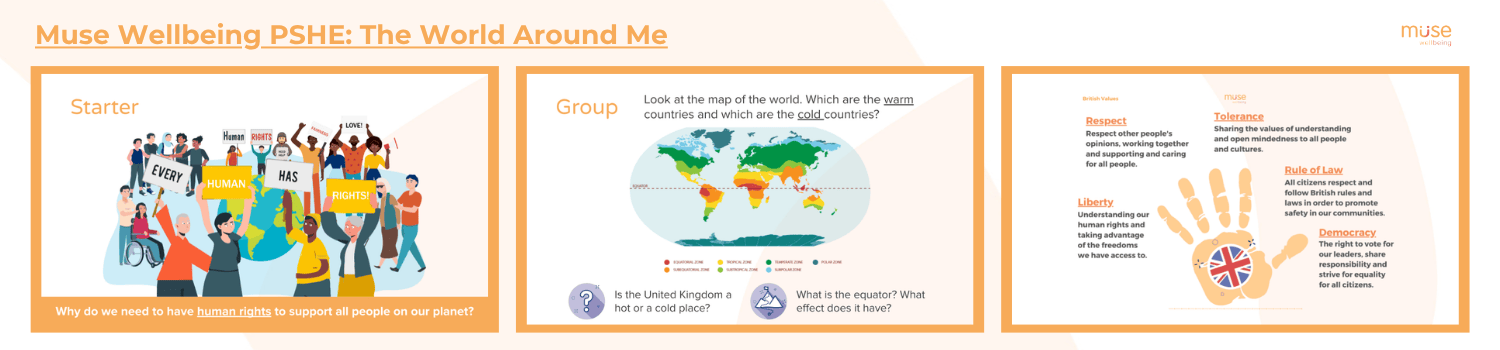
The Muse Wellbeing PSHE scheme of work sequences the topic’s learning carefully so children build on their understanding over time. Lessons support teachers in exploring topics such as community, belonging, responsibility, financial awareness, media literacy, global citizenship and future aspirations. This gives schools a clear route through the topic while keeping lessons relevant and engaging whilst scaffolding learning.
It also helps reduce teacher workload. With a strong scheme of work in place, teachers can spend more time leading discussion, encouraging reflection and responding to pupils, and less time creating every lesson from scratch. In a subject like PSHE, that kind of structure can make delivery much stronger.
Final Thoughts on PSHE: Living in the Wider World
Living in the Wider World is an important part of helping children understand the society they live in. It supports learning around community, citizenship, money, media, responsibility and aspiration in a way that feels relevant to primary school life. When taught well, it helps pupils become more reflective, more informed and more confident in the world around them.
For schools, this strand is also an opportunity to bring together some of the most practical and meaningful aspects of PSHE. It helps children think carefully about how communities operate, why choices matter and how they can play a positive role in the world around them. Through The World Around Us, Muse Wellbeing aims to make that learning clear, purposeful and easy for primary teachers to deliver.

Better Wellbeing for all
school communities
school communities
Muse Wellbeing
Subscribe for RSHE & Wellbeing Updates & Learning Resources
Receive essential information on RSHE and wellbeing for your school and community
Thank you!
Copyright © 2026 Muse | All Rights Reserved.
Are you ready to logout of Muse Wellbeing?
Write your awesome label here.
Created with