
PSHE Teaching Ideas
Mar 9
/
Muse Wellbeing

Author: David
David is the Muse Wellbeing director and lead curriculum developer. His Main passions include education, surfing and travelling.
David is the Muse Wellbeing director and lead curriculum developer. His Main passions include education, surfing and travelling.

Edited/Reviewed: George
George is an international school teacher based in Asia. A passionate language learner and polyglot, he thrives in diverse classrooms.
George is an international school teacher based in Asia. A passionate language learner and polyglot, he thrives in diverse classrooms.
Many teachers look for PSHE teaching ideas that help lessons feel interesting, relevant and meaningful for pupils. While PSHE education is a key way for young people to learn about developing positive relationships and maintaining good wellbeing, it is also an important part of helping pupils understand the everyday choices they make.
Pupils can think about how they relate to one another through friendships, how they feel and why they react emotionally, and how they can make decisions about health and wellbeing through collaboration, open discussion and reflection.
While many teachers see the value in PSHE education, it can sometimes be difficult to provide consistent PSHE teaching in busy classroom environments. The following PSHE teaching ideas highlight the broader role of PSHE education, what effective PSHE lessons look like and several strategies that can support pupil engagement in PSHE learning.
The Impact of PSHE Education in UK Schools
Effective PSHE education has an impact on pupils’ understanding of themselves and others, as well as how they operate in the wider society. Lessons that focus on emotional wellbeing, friendships and relationships help pupils develop lifelong personal and social skills that enhance their experience of learning across the curriculum.
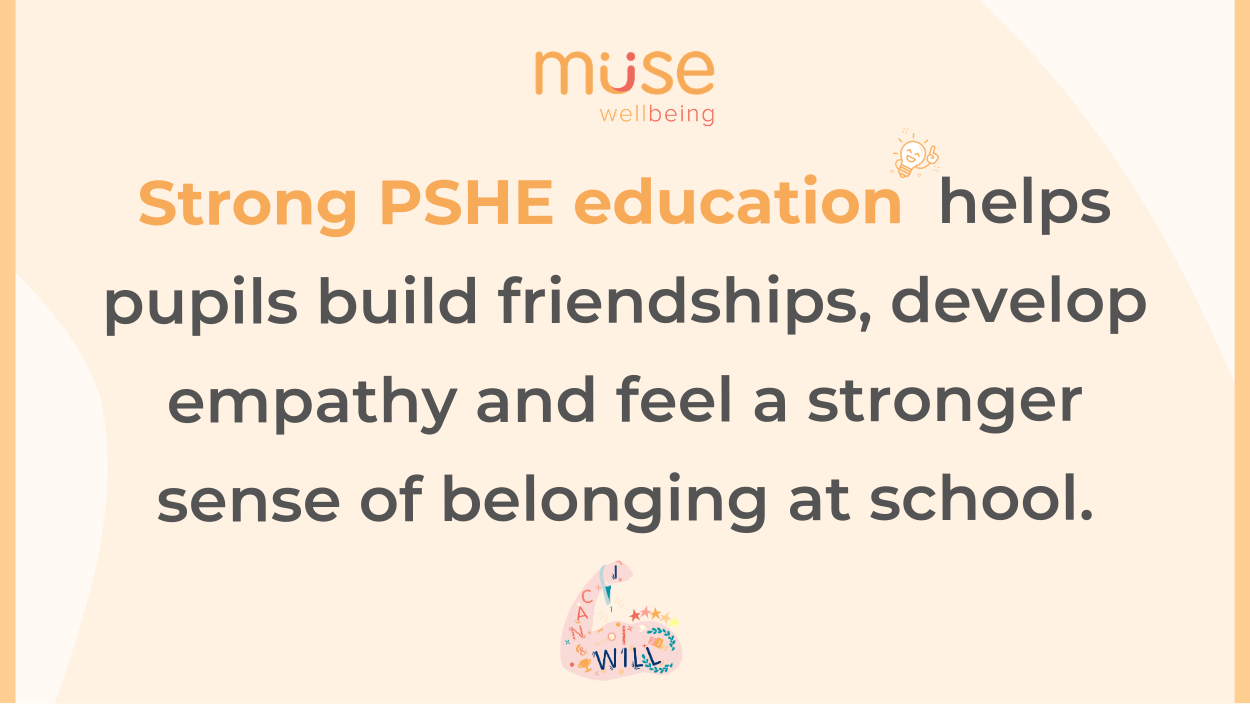
The Good Childhood Report by the Children’s Society (2024) indicates that friendships and pupils’ positive experiences at school have a significant impact on children’s overall wellbeing. Both areas are commonly explored throughout the PSHE curriculum, as they provide opportunities for pupils to discuss relationships, feelings and a sense of belonging. Further information can be found in the Good Childhood Report.
PSHE lessons offer pupils the opportunity to reflect on their own experiences and how they interact with others. Topics such as building resilience, developing empathy, respecting different viewpoints and developing responsible decision-making skills can be explored in ways that are appropriate for different ages.
Providing time for pupils to express their views and hear the views of others also helps strengthen relationships within the classroom. Developing pupils’ understanding of one another supports the development of a strong classroom community.
What Makes an Effective PSHE Lesson?
Effective PSHE lessons are characterised by thoughtful classroom discussion, clearly defined expectations and meaningful pupil participation. Because many PSHE topics involve personal experiences, it is important for teachers to create a supportive and respectful classroom environment where pupils feel comfortable sharing their thoughts.
The PSHE Association highlights the importance of creating a supportive classroom environment alongside careful lesson planning. Practical guidance on this can be found in their resource on safe classroom and effective PSHE teaching.
Many teachers combine discussion with interactive activities when introducing PSHE topics. A lesson might begin with a short scenario, encourage pupils to reflect on past experiences or involve group discussions exploring different viewpoints. These methods help pupils develop communication skills, empathy and confidence when expressing their ideas.

Reflection is another important part of PSHE learning. Allowing time at the end of a lesson for pupils to reflect on what they have learned, or how the topic relates to everyday life, helps reinforce key messages.
Three Teaching Ideas for PSHE
Scenario Cards and Role Play Activities
Using role play activities can help pupils explore situations they may encounter at school or in the wider community. Examples might include a disagreement between friends, someone being left out during a playground activity or a misunderstanding during group work.
Pupils can discuss how the characters involved might feel and suggest ways of resolving the situation. In some cases pupils may act out the scenario themselves, allowing them to practise communication and problem-solving skills while considering how actions can affect others.
Role play activities can be particularly helpful when exploring topics such as cyberbullying, conflict resolution and responsible online behaviour.
Kindness and Community Challenges
Small challenges can provide opportunities for pupils to apply PSHE values in everyday school life. One example is introducing a weekly kindness challenge that encourages pupils to support others within their class or wider school community.
Examples may include inviting someone to join a playground activity, thanking someone who has offered help during the week or carrying out a small act of kindness for a classmate. These simple activities reinforce empathy, teamwork and positive behaviour.
Some schools extend these ideas by creating pupil leadership roles. Initiatives such as wellbeing ambassadors allow pupils to promote kindness, inclusion and wellbeing across the school community. Further ideas can be explored in the Muse Wellbeing article on wellbeing ambassadors in primary schools.
Using a PSHE Scheme of Work
Developing individual PSHE lesson plans can be time-consuming for teachers who are managing many other curriculum responsibilities. For this reason, many schools choose to follow a structured PSHE scheme of work that includes learning objectives, classroom activities and teaching resources.

A well-designed scheme of work introduces key PSHE themes at appropriate stages and revisits them as pupils progress through the school.
Themes such as relationships, wellbeing, financial understanding and online safety are typically explored progressively from Year 1 to Year 6. A structured curriculum also helps ensure consistency across year groups and classes. Schools looking to implement a full programme can explore the Muse Wellbeing PSHE curriculum.
PSHE Topics in Primary Schools
Several key themes run throughout the PSHE curriculum in primary schools. PSHE lessons cover a broad range of topics designed to support pupils’ personal and social development.
Relationships and friendships are central themes. Pupils explore what positive relationships look like and how disagreements can be resolved in healthy ways. These discussions help develop empathy and communication skills.
Wellbeing and mental health are also important areas within PSHE. Pupils learn to understand their emotions, develop resilience and identify strategies that support their mental and physical wellbeing.
Online safety is another essential topic. As children spend increasing amounts of time in digital environments, PSHE lessons provide opportunities to teach pupils how to use technology responsibly and safely. A broader overview of these themes can be found in the Muse Wellbeing guide to PSHE topics in primary schools.
Creating a Positive Environment for PSHE Discussions
Creating a positive classroom environment is essential for effective PSHE discussions, as many lessons involve personal experiences and sensitive topics. Pupils need to feel confident that their views will be respected and that discussions will remain supportive.
One common approach is establishing clear ground rules at the start of a lesson or unit. These rules may include listening respectfully to others, allowing everyone the opportunity to speak and avoiding judgement when someone shares their viewpoint.
These types of ground rules help build trust among pupils. When pupils feel safe sharing their ideas, discussions become more meaningful and participation increases. Practical guidance for establishing discussion expectations can be found in the Muse Wellbeing article on PSHE ground rules in the classroom.
Final Thoughts on PSHE Teaching Ideas
PSHE teaching methods are most effective when lessons combine thoughtful discussion, practical activities and a supportive classroom atmosphere. When pupils engage with real-life situations and share their perspectives, they develop important skills for maintaining positive relationships and wellbeing.
Approaches such as scenario discussions, kindness challenges and structured schemes of work allow schools to deliver PSHE lessons that are engaging and relevant to pupils’ everyday experiences. Schools wishing to establish a structured programme for delivering PSHE consistently across all year groups can explore the Muse Wellbeing PSHE curriculum.

Muse Wellbeing
Subscribe for RSHE & Wellbeing Updates & Learning Resources
Receive essential information on RSHE and wellbeing for your school and community
Thank you!

Copyright © 2026 Muse | All Rights Reserved.
Would you like to logout of Muse Wellbeing?
Created with