It is equally important to support the wellbeing of both teachers and other members of the school staff as it is to support student wellbeing. The workload, pastoral care responsibilities, and expectations for teachers and other staff members in the school can be overwhelming. Without the right support, these pressures can affect health, job satisfaction and ultimately the quality of education offered to pupils.
When staff in schools feel valued and supported, the schools have better retention rates, greater confidence and enthusiasm for working in the school, and a positive atmosphere for students and all community stakeholders. Providing facilities such as collaborative areas within a school and creating policies that promote a balance between work and personal time have the potential to create an ongoing positive impact on the school community.
Wellbeing in schools can be established through the use of frameworks like the
Wellbeing Quality Mark, which assists schools in embedding wellbeing in their culture, ensuring it is seen as a central part of education and school life rather than an optional extra.
The
wellbeing of teachers and staff directly shapes classroom practice and the culture of the school. When staff feel respected and supported, they are more likely to maintain motivation within their work duties whilst remaining creative and energetic in their roles. This in turn affects pupil outcomes, behaviour and the overall ethos of the school.
The DfE has also identified that supporting staff wellbeing is critical to retaining quality teaching staff and ensuring quality teaching overall within the school. Recognising these pressures and embedding wellbeing into policy sends a powerful message that staff health and happiness matter. Not only do these actions support staff wellbeing, they benefit the entire school community.
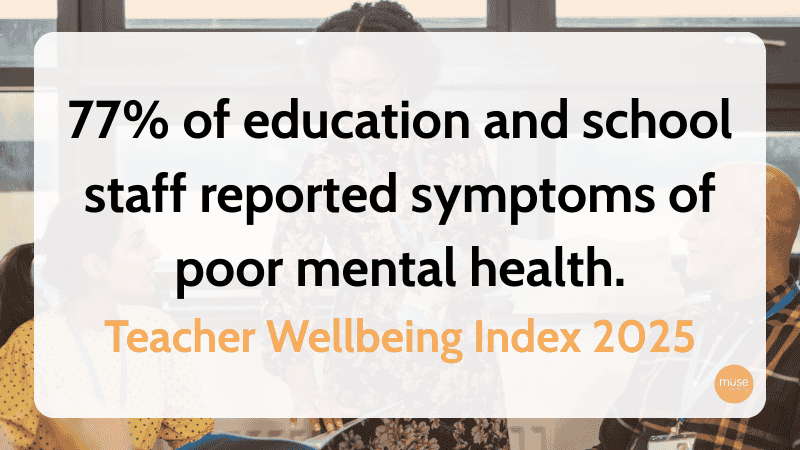
Recent teacher wellbeing surveys found that:
- 84% of teachers say they are currently more anxious than they were prior to last year ( NASUWT, 2024)
- 36% of teachers said they had considered leaving the profession due to pressures on their mental health (Education Support, 2025)
One very simple way of supporting staff is by allowing them a designated time for collaboration and reflection. Many times when staff meetings are scheduled, they are rushed and have a primary focus on task completion. Allowing some time for open discussion amongst colleagues provides an opportunity to share experiences, leverage strategies, and develop a stronger level of support for each other.
When staff are given an opportunity to reflect upon their successes and challenges, it reduces feelings of isolation and promotes collaboration. Recognising success can help to improve morale. By placing reflective practice as a regular component of weekly routines, staff will feel as though they are being heard, and they will feel supported as they continue to grow professionally.
There are several practical ways school leadership teams can improve the overall work-life balance of staff. They include setting up communication boundaries after hours; providing as many flexible work arrangements as possible; and eliminating unnecessary administrative duties.
By implementing these changes, staff see that wellbeing goes beyond being a buzzword, and it shows that it is a priority. When teachers know they can disconnect from work while at home, they will be able to rest properly and return to the classroom with renewed energy. A sustainable workload benefits both staff as well as students by allowing them to teach in an innovative, focused, and effective manner.
Access to wellbeing resources is an expectation for all staff. Examples of wellbeing resources include mental health support, counselling services, resilience workshops or training on stress management. Many schools offer dedicated wellbeing hubs for staff to access support, either via a physical space or via an on-line platform.
Creating an environment in which there is a normal conversation about mental health reduces the stigma attached to these type of conversations and helps staff feel safe to seek appropriate assistance. Visibility will demonstrate that schools are serious about staff and individuals rather than just a professional basis. Schools build their culture around wellbeing by supporting the teacher and staff to be able to thrive in their careers.
The Wellbeing Quality Mark (WQM) is the accredited way for schools in England to prove their commitment to improving wellbeing for their pupils and staff. The WQM is a robust framework that allows schools to review the policies, practices and culture of schools, ensuring that the wellbeing of pupils and staff are a fundamental part of everyday life. The WQM is assessed through staff voice surveys, leadership training and evidence that wellbeing is embedded throughout the school.
WQM was developed by Cathal Lynch, a well-respected headteacher and consultant who has been a passionate advocate for putting wellbeing at the forefront of all educational activity. The intention of the WQM is to provide schools with recognition of good practice and a framework for improvement. Schools seeking to achieve the WQM are guided on how best to develop a culture that will support all those in the community.
In achieving the Wellbeing Quality Mark, schools demonstrate that the wellbeing of both staff and pupils is not an “add-on” to education, but is an integral part of how education is delivered. For staff, recognition of their contribution to a school that values health and happiness will help to further improve a culture of support for all members of the school receiving a quality education.