
Anti-Bullying Lessons KS2
Feb 11
/
Muse Wellbeing

Author: David
David is the Muse Wellbeing director and lead curriculum developer. His Main passions include education, surfing and travelling.
David is the Muse Wellbeing director and lead curriculum developer. His Main passions include education, surfing and travelling.

Edited/Reviewed: Tashia
Tashia is a SENCO and LSA support lead with a love for inclusive education. An avid gardener, she enjoys the outdoors and hiking.
Anti-bullying lessons in the KS2 curriculum aid students to develop an understanding of how they relate to others, behave and take on responsibilities as members of their school community. Children at this age are growing socially more aware, independent and having more complex relationships with their peers. A well-designed anti-bullying program can support students in identifying hurtful behaviors, responding appropriately and contributing to an atmosphere that is respectful and inclusive.
Well-designed anti-bullying programs accomplish much more than defining what bullying is. Programs such as this assist students in building empathy, self-confidence and ability to communicate effectively; and clearly reinforce for them what kindness, respect and positive behavior mean. By providing consistent anti-bullying instruction across all of Key Stage 2, schools provide students with a foundation from which to build their emotional and mental readiness to learn and succeed academically.
What is Bullying in Key Stage 2 Year Groups?
Bullying in KS2 (and the wider school community) is generally viewed as persistent behavior that aims to cause distress, upset or to exclude another person. The behavior can be physical, verbal, social or via the use of technology.
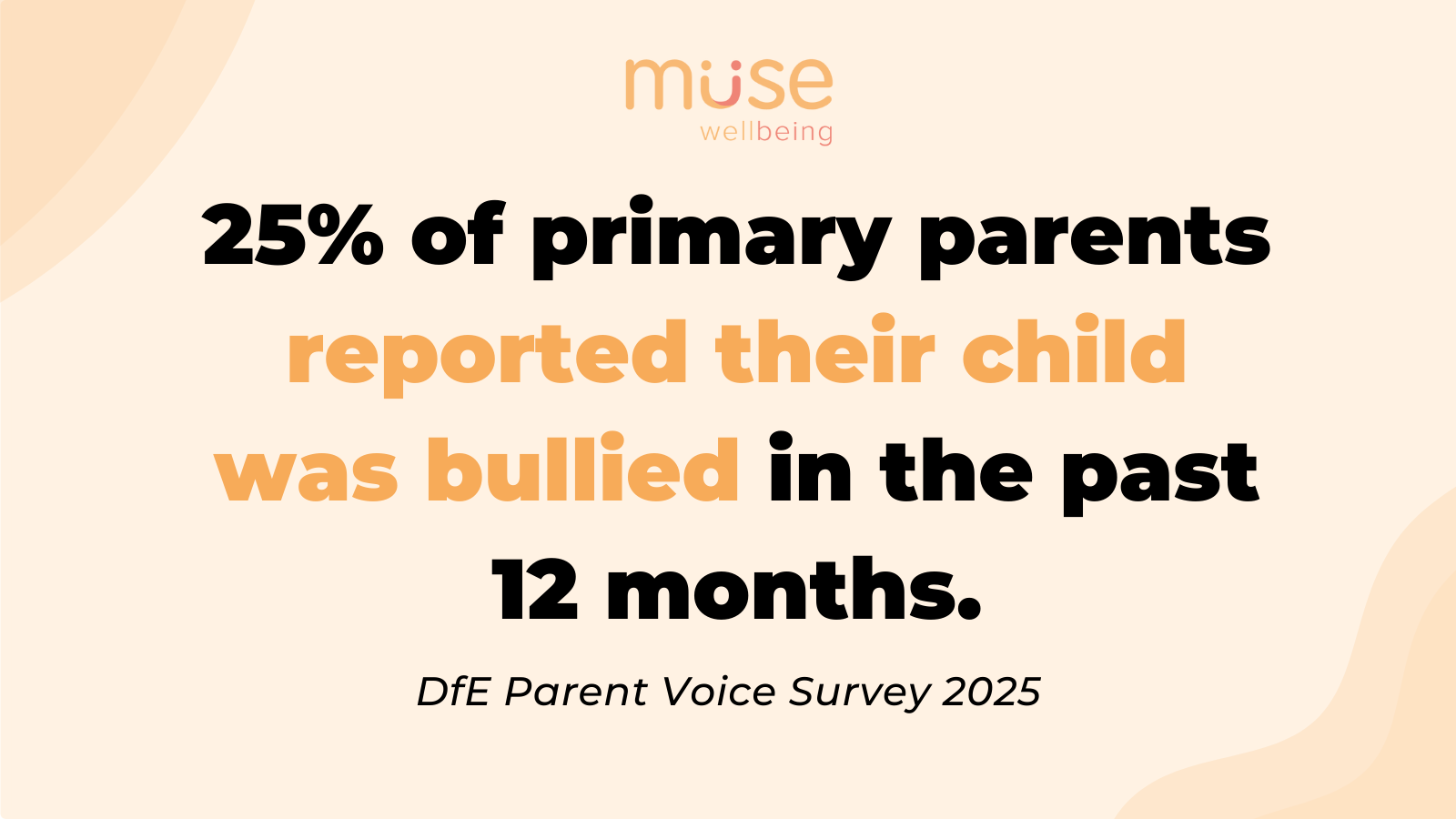
Unlike brief disagreements or moments of rudeness, bullying behaviors are characterized by an inequality of power and typically create sustained emotional harm for the victim. As pupils progress through KS2, bullying can develop into more subtle forms, including excluding other pupils, name calling, gossiping about other pupils, using social media and other digital technologies for bullying. This is why anti-bullying lessons for KS2 pupils concentrate on developing an awareness of the differences between being impolite/rude/unfriendly, and bullying behavior. This understanding allows pupils to recognize when additional support or assistance is required.
Schools in England are obligated to actively pursue strategies to prevent bullying, as well as promote the wellbeing of their pupils. The UK Government has also provided guidance on anti-bullying practices in schools, specifically focusing on whole school approaches which include the implementation of clear anti-bullying policies, staff training and provision of education relevant to the age of the pupil.
The Role of Schools in Preventing Bullying in KS2
Schools have a major role to play in preventing bullying by establishing standards, modeling respectful behavior, and providing safe spaces for pupils to discuss concerns or issues. Anti-bullying lessons will be most successful if delivered as part of a broader PSHE and wellbeing curriculum as opposed to being stand-alone activities. A strong preventative approach will include:
- Developing pupil's understanding of how their behavior impacts others
- Promoting positive communication and inclusive values
- Providing pupils with opportunities to speak out safely
- Ensuring pupils have access to people they can go to for support
The Anti-Bullying Alliance (ABA), a national organization, has emphasized that anti-bullying programs work best when schools prioritize building relationships, empathy and pupil voice throughout the year. Muse Wellbeing is proud to partner with the Anti-Bullying Alliance and ensure all KS2 educational materials and resources it produces meet the current best-practice guidance shared nationally within the sector.
Exploring Key Stage 2 Anti-Bullying Lessons
The Muse Wellbeing primary school PSHE, RSE and Wellbeing scheme of work is based upon respect, compassion, kindness and optimism. Rather than just teaching about bullying as a problem, our wellbeing lessons will show pupils how relationships can have both positive and negative effects on mental health and wellbeing. Pupils will learn that healthy relationships are based upon understanding each other, communicating effectively and respecting each other.
Anti-bullying learning will be revisited across KS2, but in ways suitable for each year group, allowing pupils to gain a deeper understanding as the complexity of social situations grows. Our programme promotes reflection, debate and practical strategies which enables pupils to feel empowered to respond to difficult behavior.
The three lessons illustrated below provide a good example of how anti-bullying learning develops through Key Stage 2.
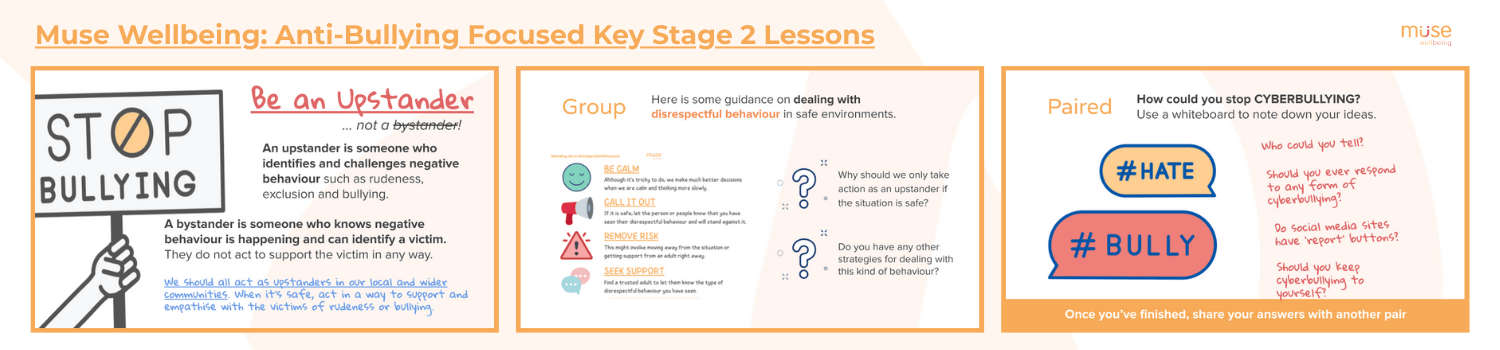
The three lessons illustrated below provide a good example of how learning develops through Key Stage 2.
Year 3: Be an Upstander
The Year 3 lesson 'Be an Upstander' introduces pupils to many of the fundamental concepts relating to bullying in a straightforward manner. Pupils investigate the differences between rudeness, meanness and bullying. This is an important differentiation for younger KS2 pupils to identify when behaviour crosses a boundary.
A key part of the lesson is the contrast between being a bystander and an upstander. Pupils will discover that an upstander is somebody who acknowledges negative behaviour and decides to take action in a supportive way. Using hypothetical situations and directed conversation, pupils will consider empathy, courage and peer pressure whilst being advised that there are times when it may not be safe to take action. This lesson provides an early basis for pupils to develop confidence in standing up for themselves and seeking help, thus providing a solid foundation for future learning.
Year 4: Positivity and Respect
The Year 4 lesson 'Positivity and Respect' moves away from considering bullying behaviour within small groups and focuses on behaviour within larger communities. Pupils will investigate what constitutes respectful or disrespectful behaviour and why respect is essential for forming positive relationships.
The lesson encourages pupils to reflect on how language, actions and attitudes affect other people. Pupils will engage in group conversations and role-play exercises to practice reacting respectfully to unacceptable behaviour in a secure environment. More importantly, the lesson reminds pupils that we all have a duty to create a positive school community. This lesson will enable pupils to recognize indicators of potentially harmful behaviour and how to appropriately challenge it.
Year 5: Cyberbullying
At the top end of KS2, online behaviour is becoming increasingly relevant to pupils. The Year 5 lesson 'Cyberbullying' directly addresses this and assists pupils in understanding what cyberbullying is, how it varies from face-to-face bullying and its potential effect on mental health.
Pupils will examine various forms of cyberbullying (e.g., harassment via messaging, games platforms and social media) and will emphasize practical methods of dealing with cyberbullying (reporting incidents, blocking harmful material, contacting a trusted adult). Additionally, pupils will reflect on the emotional implications of cyberbullying and the importance of avoiding responding impulsively online. This lesson complements advice provided by organizations such as the Anti-Bullying Alliance, enabling schools to meet obligations regarding internet safety and wellbeing.
Looking Beyond Anti-Bullying Week
Schools have an opportunity to build on the momentum generated by annual Anti-Bullying Weeks through ongoing, long-term development and the embedding of anti-bullying into a wide ranging PSHE curriculum. The result is a sustained approach that supports and develops pupil wellbeing and promotes a culture in which all students feel supported and able to succeed within school.
The Anti-Bullying Alliance, along with other national bodies, encourage schools to engage with local partnerships, who will be aware of community needs and be able to support schools in their efforts to provide effective support for children and young people. Muse Wellbeing recognises the importance of local champions and we were delighted to meet Ann Foxley-Johnson (leader at The Anti-Bullying Company) who works tirelessly as a champion for anti-bullying in her local communities.
Through delivering structured lessons, offering trusted advice and using local knowledge and experience, schools can develop environments in which children and young people feel safe, valued and heard.
Through delivering structured lessons, offering trusted advice and using local knowledge and experience, schools can develop environments in which children and young people feel safe, valued and heard.

Better Wellbeing for all
school communities
school communities
Muse Wellbeing
Support
Subscribe for RSHE & Wellbeing Updates & Learning Resources
Receive essential information on RSHE and wellbeing for your school and community
Thank you!

Copyright © 2026 Muse | All Rights Reserved.
Ready to logout of Muse Wellbeing?
logout of Muse Wellbeing?Write your awesome label here.
Created with